Resolving Coolant Loss, Power Loss, and White Smoke from EGR Cooler Failure in a Land Rover 3.0L TDV6
Engine Replacement & Restoration
Executed by RR4X4Works certified master technicians with OEM-standard verification.
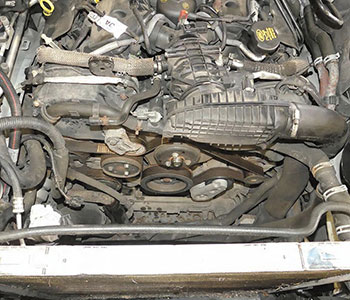
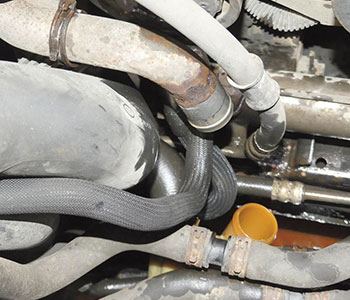
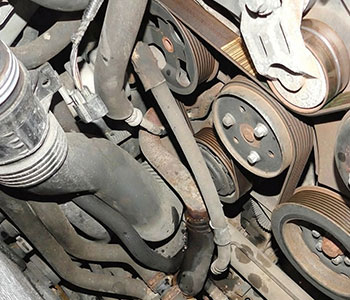
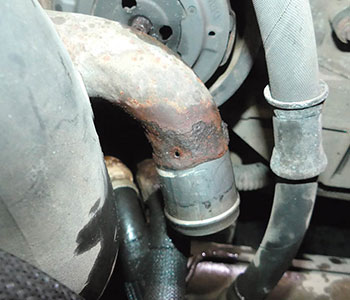
Vehicle Details
Land Rover 3.0 TDV6 EGR Cooler Failure & Coolant Ingress Repair
The owner arrived after searching Google for: “Discovery 4 3.0 diesel white smoke, losing coolant, rough idle – not overheating?”
The vehicle’s specific problem was a dual-system failure affecting both engine performance and the cooling system: the engine produced thick white smoke from the exhaust, particularly on startup and under load. It was consuming coolant at a rate of about 1 litre per 500 miles without any visible external leaks. The engine also had a rough, uneven idle and a significant loss of power. The owner’s primary concern was the fear of a cracked cylinder head or blown head gasket and the confusing combination of symptoms that didn't neatly fit one single failure.
Our Diagnostic Process: Finding the Root Cause in the Land Rover 3.0 TDV6
These symptoms pointed towards coolant entering the combustion process, but not from the typical head gasket path common in petrol engines.
- Initial Observation & Fluid Check: A key clue was present before any testing: the engine was not overheating. The temperature gauge remained normal. Upon checking the engine oil via the dipstick, we found a thin, milky, mayonnaise-like substance on the oil filler cap, indicating coolant was emulsifying with the oil in the crankcase ventilation system.
- Combustion Leak Test (Negative): We performed a chemical block test on the coolant expansion tank. The test fluid did not change colour, providing strong evidence that combustion gases were not pressurizing the cooling system. This effectively ruled out a head gasket failure or a crack in the cylinder head/block.
- Diagnostic Code Analysis: Using the Land Rover SDD (Pathfinder) system, we pulled fault codes. There were multiple random misfire codes (P0300) and a code for the Exhaust Gas Recirculation (EGR) valve position sensor (P0401). The misfires were a symptom; the EGR code was a potential clue to the cause.
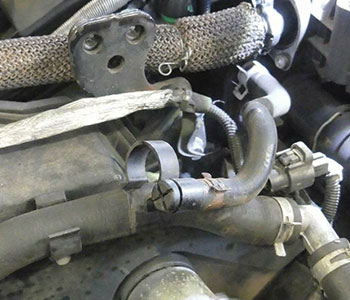
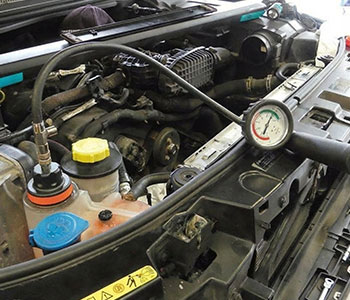
- Pressure Testing & Source Identification: We performed a cooling system pressure test with the engine cold. The system lost pressure slowly over 20 minutes. Using a boroscope, we inspected the EGR valve and cooler assembly. Visible coolant residue was present around the EGR valve flange. A more definitive test involved isolating the EGR cooler with blanking plates (a diagnostic procedure, not a fix). After a short drive with the cooler isolated, the coolant loss and white smoke stopped, confirming the EGR cooler as the leak source.
The Critical Factor Often Overlooked
The classic assumption with white smoke and coolant loss in a diesel is a failed cylinder head gasket. However, in modern diesel engines with complex emissions systems, a failed EGR (Exhaust Gas Recirculation) cooler is an equally common, and often misdiagnosed, culprit. The EGR cooler is a small heat exchanger that uses engine coolant to cool exhaust gases before they are recirculated. If its internal core cracks, it creates a direct path for pressurised coolant to leak into the low-pressure exhaust gas stream. This leads to coolant being burned in the cylinders (white smoke) and potentially being drawn into the intake under vacuum (causing hydraulic lock risk and emulsified oil).
The Root Cause Explained
In this TDV6 engine, the root cause was the failure of the EGR cooler's internal core due to thermal stress and corrosion. The cooler is a metal tube housed in a coolant jacket. Over time, the constant cycling between extremely hot exhaust gases and cooling coolant causes metal fatigue. Microscopic cracks develop in the tube walls. Once cracked, pressurised engine coolant (from the cooling system) is forced into the exhaust gas passage inside the cooler. This coolant-laden exhaust gas is then fed back into the engine's intake manifold. The coolant vaporises in the combustion chambers, creating dense white smoke, and contaminates the engine oil via the crankcase ventilation system. In simple terms, imagine a water pipe (coolant) running inside a smoky exhaust pipe. If the inner pipe springs a leak, water sprays into the smoke, and that wet smoke is then fed back into the engine.
Our Repair Strategy: The Most Comprehensive Solution for Long-Term Reliability
With a confirmed leaking EGR cooler, the repair must address both the faulty component and the systemic contamination it caused.
- EGR Cooler Replacement Only: Swapping out the faulty cooler unit.
- Potential Outcome: Stops the coolant leak and should eliminate white smoke.
- Long-Term Consideration: An incomplete repair. It ignores the significant coolant contamination in the engine's intercooler, intake manifold, and crankcase oil. This residual coolant can cause corrosion, continued rough running, and oil breakdown, leading to secondary damage like turbocharger failure or bearing wear.
- EGR Cooler Replacement with Full System Decontamination (Our Chosen Strategy): Replacing the EGR cooler and performing a comprehensive clean of the entire intake and crankcase ventilation system, along with an engine oil and filter change.
- Why This Was the Most Comprehensive Choice: This strategy eradicates both the fault and its damaging effects. It removes the leak source (new cooler) and cleans up the mess it created (contaminated intake and oil). This prevents follow-on issues, ensures smooth engine operation immediately, and protects the turbocharger and other components from ingesting coolant residue.
Our Detailed Repair Procedure:
- System Depressurisation & Component Removal: We drained the cooling system and removed the EGR valve and cooler assembly.
- Installation of New Components: We installed a new, Genuine Land Rover EGR cooler and a new EGR valve gasket.
- Critical Decontamination Process: This was the most important step:
- We removed the intercooler and intake manifold and professionally cleaned them to remove all coolant and carbon residue.
- We flushed the crankcase ventilation system.
- We performed a complete engine oil and filter change to remove the emulsified oil.
- Reassembly & System Bleeding: All components were reinstalled. The cooling system was vacuum-bled to ensure no air pockets remained. The engine management fault codes were cleared, and the ECU was put through an adaptive drive cycle to relearn trim values.
Results & "Before/After" Proof
- Coolant Loss: Coolant level remained perfectly stable with no further top-ups required.
- Exhaust Smoke: The dense white smoke was completely eliminated from startup and under all driving conditions.
- Engine Performance: The rough idle and power loss were resolved. Engine smoothness returned to normal.
- Oil Condition: The milky residue on the oil cap did not return, confirming the contamination source was removed.
Summary:
- Core Problem: Internal coolant leak from a cracked EGR cooler, leading to coolant ingestion, white smoke, and oil contamination.
- Solution: Replacement of the EGR cooler coupled with a full decontamination of the intake system, intercooler, and crankcase, followed by an oil change.
- Outcome: A sealed cooling system, clean combustion, and uncontaminated oil, restoring full engine performance and reliability.
Verified Customer Review
— Fiona C., Yorkshire
“Everywhere I called said ‘head gasket’ as soon as I mentioned white smoke and coolant. RR4x4 Works did a simple test that proved it wasn’t the head. They found the leak was in the EGR cooler and explained exactly how the coolant was getting into the engine. Cleaning out the whole intake system and intercooler was a revelation – the amount of gunk that came out was shocking. Now it runs cleanly, doesn’t use a drop of coolant, and the oil is clean. Their diagnostic skill saved me from an unnecessary and massive repair bill.”
Read More ↑Concerned About a Similar Issue? Get a Professional Diagnosis
White smoke and coolant loss in a modern diesel require precise diagnosis. Mistaking an EGR cooler leak for a head gasket can lead to a repair that doesn't fix the problem. Contact RR4x4 Works for a methodical diagnosis that isolates the true source of the leak.
Get Free Quote Call 01708 556 721